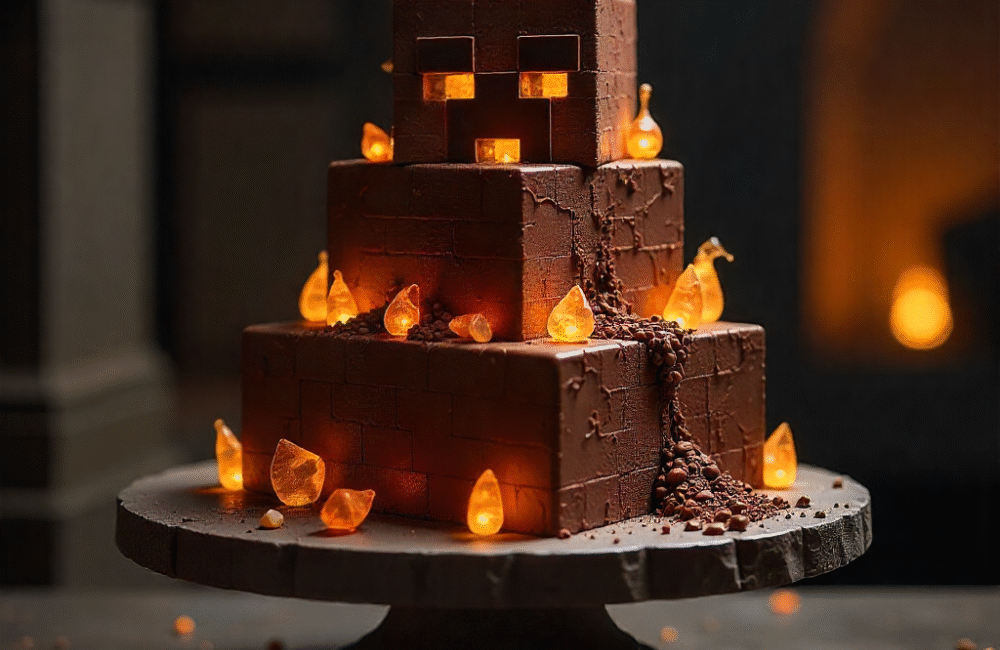
Minecraft cake is not merely a sweet treat; it is a carefully constructed artefact, embodying both the whimsical geometry of the digital realm and the tactile pleasure of traditional baking. Much like the game itself, where each block holds significance in a larger design, a cake crafted in this style becomes an object of shared memory and narrative, rooted in the joy of creation.
Why Minecraft Translates So Well to Confectionery
The aesthetic of Minecraft is instantly recognisable: a pixelated visual language born out of deliberate simplicity. In culinary form, this offers a canvas of clean lines, sharp edges, and bold colours.
One baker in Singapore described the appeal as “translating code into crumb,” explaining how the crisp geometry of a block-shaped sponge captures the spirit of the game. The connection between the digital and edible world is more than novelty; it is an act of cultural translation, where one medium adopts the grammar of another.
Common Design Approaches for Minecraft-Themed Cakes
When considering the architecture of such a cake, several stylistic approaches emerge:
· Block-by-Block Accuracy: A cube-shaped cake with precise fondant tiles, each square representing a pixel.
· Character Portrait Cakes: Featuring the faces of Steve, Alex, or the iconic Creeper, rendered in edible colours.
· Layered Biome Cakes: Each tier represents a different in-game environment, grasslands above, mines below.
· Miniature Build Replicas: Detailed recreations of in-game structures, from small huts to fortresses.
· Cupcake Assemblies: Dozens of small cakes arranged into a larger image, such as a sword or heart icon.
Flavour Profiles: Tradition Meets Local Innovation
The surface design often commands attention, but the flavour beneath can transform the cake into something memorable. While vanilla and chocolate are reliable bases, Singapore bakers frequently weave in local taste traditions:
· Pandan Sponge: A fragrant, green-hued nod to Southeast Asian heritage.
· Gula Melaka Drizzle: A caramel-like richness with palm sugar undertones.
· Coconut Cream Layers: Bringing both lightness and depth.
· Milo-Chocolate Blend: An instantly recognisable flavour for many in the region.
The key is harmony between visual design and flavour composition; the cake must taste as good as it looks.
Techniques for Achieving Pixel Perfection
A Minecraft-themed cake requires a discipline not unlike architectural drafting:
· Fondant Grids: Cutting precise fondant squares to lay in even patterns.
· Edible Printing: Using food-safe inks to reproduce detailed graphics.
· Structural Supports: Ensuring cubic cakes remain stable, especially in multi-tier designs.
· Colour Matching: Replicating the exact RGB tones from the game to preserve authenticity.
As one Singapore artisan noted, “The hardest part is patience. You’re not just icing a cake, you’re placing every block in a world you’re building for someone’s memory.”
Practical Considerations for Event Day
The cake’s role at a celebration is ceremonial as much as it is culinary. A few practical measures can ensure the moment unfolds seamlessly:
1. Sizing with Care: Base the cake’s dimensions on guest numbers; excess is costly, scarcity is disappointing.
2. Temperature Control: In Singapore’s climate, refrigeration until the last possible moment is essential.
3. Timing the Reveal: Present the cake before slicing to allow for photographs and admiration.
4. Transport Logistics: Use rigid boxes and a flat surface to avoid damaging delicate fondant edges.
Incorporating the Cake into a Larger Theme
To integrate the cake within the party’s thematic arc:
· Use pixelated table runners or block-pattern plates to echo the cake’s design.
· Create game-inspired snack stations, offering “emeralds” (green jelly beans) or “lava” (red punch).
· Add Minecraft-inspired music to the moment of presentation, heightening atmosphere.
This synchrony between cake and context deepens the immersive quality of the event.
The Cultural Meaning of a Minecraft Cake
It is tempting to regard themed cakes as mere novelties, yet they often serve a deeper function: materialising an intangible, virtual world. For younger celebrants, it is a rare instance where the imagined environment becomes something tangible, a bridge between the inner landscapes of play and the shared spaces of family and friends.
The ritual of slicing such a cake is symbolic, dismantling, block by block, what has been so carefully built, yet sharing it generously with all present. This reflects, in some small way, the ethos of the game itself: construction, deconstruction, and collective enjoyment.
Conclusion: Crafting Memory in Sugar and Sponge
To create a cake inspired by Minecraft is to join in the act of world-making. The baker assumes the role of a digital architect in an analogue medium, building something that will be both admired and consumed. Like the game, it invites imagination, patience, and an appreciation for small details.
When the candles are lit and the room is filled with expectant faces, the cake stands as the centrepiece, not just of the table, but of the day’s story. And when the final slice is served, the memory remains, much like a beloved save file, ready to be revisited in conversation and photographs. In the end, nothing quite embodies that fusion of play and celebration like a perfectly realised minecraft cake.