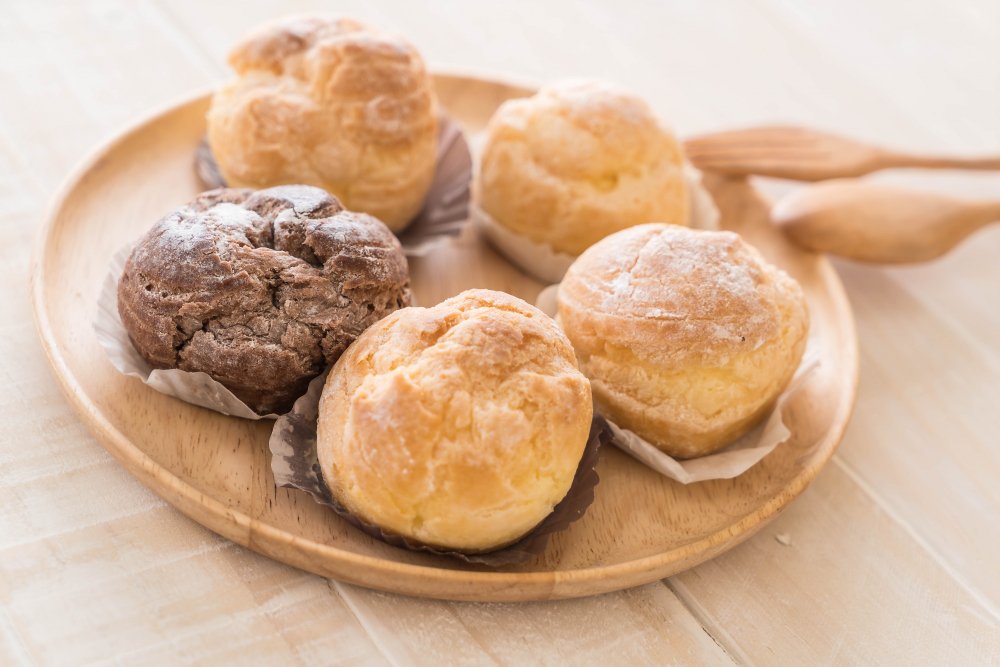
What Are Cream Puffs?
Cream puffs are delicate pastries made from choux pastry dough that puffs into hollow, airy shells during baking, then filled with sweetened whipped cream, pastry cream, or other luscious fillings. These golden orbs represent one of the most satisfying achievements in home baking, transforming simple ingredients like flour, butter, eggs, and water into elegant desserts that seem to defy their humble origins.
The magic of My Bake Studio’s cream puff lies in their dramatic transformation during baking. The choux pastry dough begins as a thick, glossy mixture that barely resembles pastry, yet emerges from the oven as light, crispy shells with spacious interiors perfect for holding generous amounts of cream. When properly executed, cream puffs offer a textural contrast between the crisp exterior and silky interior that creates an almost ethereal eating experience.
The History and French Connection
Cream puffs trace their origins to 16th century France, where they evolved from earlier Italian pastry techniques brought to the French court. The pastry gained prominence through the work of French chef Panterelli, who refined the technique for creating what became known as pâte à choux, or choux pastry. The name “choux” means cabbage in French, referring to the resembling shape of the baked pastries to small cabbages.
Catherine de Medici’s Italian pastry chefs are often credited with introducing the foundational techniques to France, but it was French culinary innovation that perfected the method and created the versatile foundation for numerous classic pastries. Beyond cream puffs, choux pastry became the base for éclairs, profiteroles, croquembouche, and Paris-Brest, establishing an entire family of beloved French pastries.
The technique spread throughout Europe and eventually worldwide, with each culture adapting the basic concept to local tastes and ingredients. Today, variations of cream puffs appear in cuisines from Japanese cream puffs filled with green tea-flavored cream to Italian bignè served at celebrations throughout Italy.
The Science Behind Perfect Choux Pastry
Creating successful cream puffs requires understanding the unique science behind choux pastry, which relies on steam rather than chemical leavening agents for its dramatic rise. The process begins by cooking flour with water and butter, which pre-gelatinizes the starches and creates a smooth paste that can hold substantial amounts of eggs without breaking.
The incorporation of eggs transforms the cooked paste into a pipeable dough with remarkable properties. As the pastry bakes, moisture within the dough converts to steam, creating internal pressure that inflates the shells like balloons. The eggs provide structure through protein coagulation, while the pre-cooked flour creates a framework that maintains the puffed shape as the pastry sets.
Temperature control proves crucial throughout the process, from the initial cooking stage through baking. The dough must be sufficiently hot when eggs are added to partially cook them, creating the proper consistency for piping. During baking, consistent oven temperature ensures even rising and browning without collapsing the delicate structure before it fully sets.
Essential Techniques for Success
Mastering cream puffs begins with properly cooking the initial flour mixture, known as the panade. This stage requires stirring the mixture over medium heat until it forms a smooth ball and pulls away from the pan sides, indicating that excess moisture has evaporated and the flour is fully cooked. Under-cooking at this stage results in weak shells that collapse, while over-cooking can make the dough too stiff to accept eggs properly.
The gradual incorporation of eggs represents the most critical phase in choux pastry preparation. Eggs must be added slowly while the mixture is still warm but not hot enough to scramble them. The dough should become smooth and glossy, flowing slowly from a spoon in a V-shaped ribbon when properly mixed. This consistency ensures the dough has enough moisture to create steam while maintaining structure during baking.
Piping technique affects both appearance and performance, with consistent sizing and spacing allowing for even baking. Using a pastry bag fitted with a large round tip creates uniform shapes, while maintaining steady pressure ensures consistent thickness that bakes evenly throughout each puff.
Filling Options and Flavor Variations
Traditional cream puff fillings center around various forms of cream, from simple sweetened whipped cream to rich pastry cream flavored with vanilla, chocolate, or fruit. Pastry cream, made with eggs, milk, sugar, and cornstarch, provides a more stable filling that maintains its texture longer than whipped cream while offering opportunities for flavor customization through extracts, liqueurs, or fruit purées.
Modern interpretations expand beyond traditional boundaries, incorporating ice cream for frozen variations, savory fillings for appetizer applications, or exotic flavors like matcha, lavender, or cardamom. Some bakers create themed variations for holidays, such as pumpkin spice filling for autumn celebrations or peppermint cream for winter gatherings.
Chocolate lovers particularly appreciate cream puffs filled with chocolate ganache, chocolate pastry cream, or even chocolate whipped cream, sometimes paired with chocolate-flavored choux pastry for an intensely chocolatey experience. Fruit-based fillings using fresh berries, lemon curd, or fruit-flavored creams provide lighter alternatives that showcase seasonal ingredients.
Assembly and Presentation Techniques
Proper filling technique ensures cream puffs maintain their shape and texture while maximizing the cream-to-pastry ratio that makes them so appealing. Creating small holes in the bottom of cooled shells allows for easy filling using pastry bags, while keeping the tops intact for attractive presentation. This method also prevents the shells from becoming soggy by avoiding cuts through the more delicate upper portions.
Timing becomes crucial when assembling cream puffs, as filled pastries are best consumed within a few hours to maintain optimal texture. The contrast between crisp shells and smooth fillings diminishes as moisture from the cream softens the pastry, though properly made choux maintains some structural integrity longer than more delicate pastries.
Presentation options range from simple dusting with powdered sugar to elaborate glazes, chocolate drizzles, or decorative toppings that complement the filling flavors. Some bakers create stunning displays by arranging cream puffs in towers or wreaths, particularly popular for special occasions or French-themed celebrations.
Troubleshooting Common Issues
Flat or collapsed cream puffs typically result from insufficient cooking of the initial flour mixture, inadequate egg incorporation, or temperature fluctuations during baking. Opening the oven door too early allows steam to escape before the structure sets, causing dramatic deflation that cannot be corrected.
Dense or heavy cream puffs often indicate over-mixing after egg addition or using eggs that were too cold, preventing proper incorporation. The dough should remain light and airy throughout mixing, with smooth consistency that holds its shape when piped but flows slightly to create rounded tops.
Uneven browning or cracking usually stems from oven hot spots or temperatures that are too high, causing rapid surface setting before the interior has properly expanded. Using oven thermometers and rotating pans during baking helps ensure even heat distribution and consistent results across multiple batches.